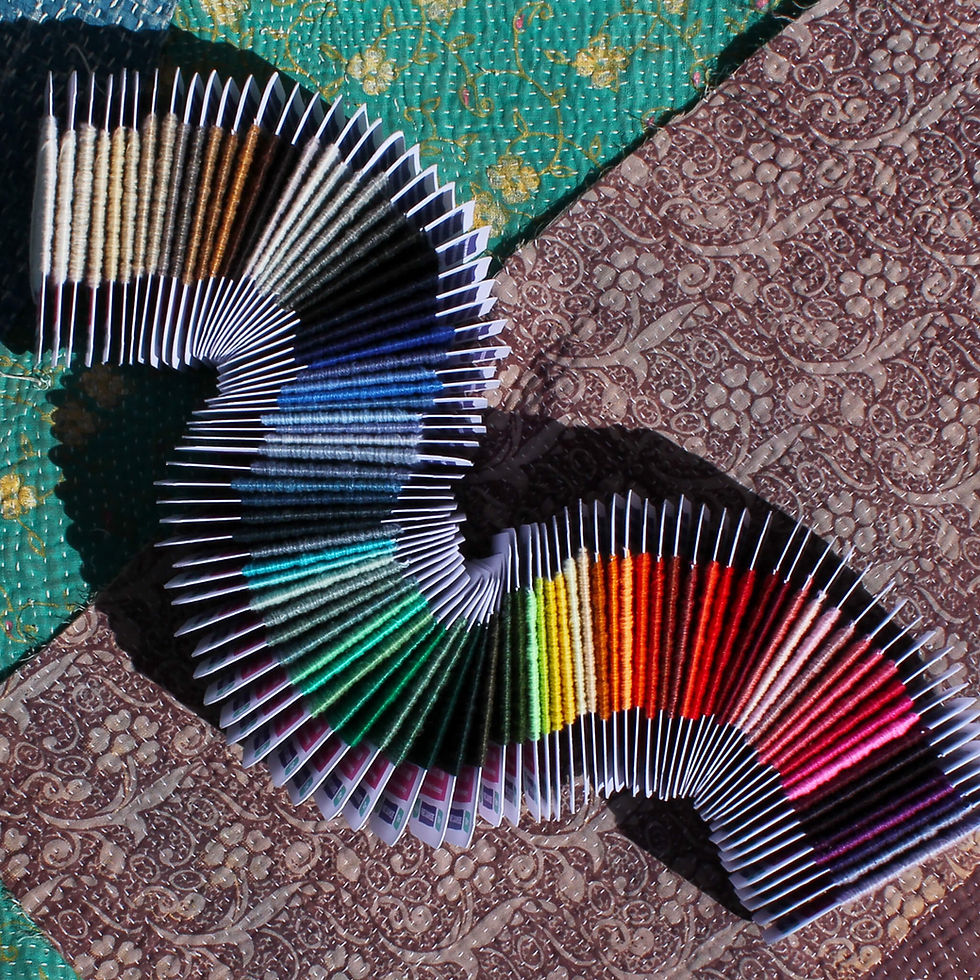
¿Por qué no intentar usar este hilo vibrante para crear una reparación visible llamativa en prendas de punto?
Una fibra natural sin fibras sintéticas, el mohair es una fibra fina que tiene brillo, suavidad y es resistente.
Este hilo proviene de los hermosos vellones de cabras de angora cuidadosamente criadas en el Reino Unido por New Forest Mohair.
Las cabras de angora son animales amigables e inquisitivos, originarios de la región de Ankara en Turquía, de donde se originó su nombre.
Adecuado para:
zurcir a mano o con telar Speedweve.
bordado en géneros de punto.
remendar prendas de punto de peso ligero a medio, por ejemplo, suéter, cárdigan, calcetines de lana, guantes, bufanda, gorro o incluso una manta.
En particular, es mejor para zurcir calcetines de lana, ya que el mohair puede resistir hasta tres veces el roce de la lana de oveja y tiene propiedades antibacterianas naturales.
Hay disponibles 9 opciones de color teñidas al azar.
Cada tarjeta individual contiene 10 metros (aprox.) O las tarjetas mixtas contienen 3 colores diferentes (5 m de cada color).
Cada largo se envuelve individualmente alrededor de una tarjeta hecha de papel reciclado.
70% cabrito mohair / 30% lana merino inglesa (el hilo de mohair a menudo se mezcla con otras fibras para mayor resistencia).
* Se ha hecho todo lo posible para garantizar que estas fotos sean una representación precisa de los colores, pero dado que cada monitor de computadora y dispositivo móvil es diferente, no podemos garantizar que el color coincida exactamente con lo que ve en línea.
SUGERENCIA: para prendas de punto gruesas, es posible que desee elegir una lana más gruesa de 4 capas o DK.
Hilo para zurcir y bordar British Kid Mohair de 2 capas - 10 m
Need a little helping hand to choose what you need for a specific mending project? Here's our five top tips:
1. Match like with like - select the same fibre as the garment you're repairing that way the repair and garment should wash and wear in much the same way as the rest of the garment. Take a look at the clothes label inside the garment to find out what it's made from.
2. The same advice applies to thickness too! Pick a yarn or thread that's a similar thickness to the garment or alternatively work with it doubled/tripled to match the weight. Also bear in mind that sometimes you can also split thread and yarns apart to make them thinner.
3. When it's not possible to find the same fibre, choose a fibre from the same group (animal, plant or synthetic) as it will have similar properties and therefore wash and wear in a similar way e.g. merino would be an excellent alternative for cashmere as it's an animal fibre like cashmere and is very close in texture etc.
4. To find a colour match - take the garment into natural light and look at any spots in need of repair. Some areas like the armpit, elbow or collar may be more worn and therefore the colour will be more faded/lighter. Ask yourself what does the colour look like? Is it a solid colour or does it have flecks of different colours aka a melange or marl? What’s the specific colour tone? For example: blue with a hint of green, or a pinkish purple as opposed to a bluish purple. If you can’t find an exact match, always opt for a colour that’s slightly darker than lighter, as the mismatch will be less noticeable. Remember, we do offer a sample service for all our mending threads & darning yarns - click here to find out more!
5. Yarn with added nylon is technically stronger/more durable than pure yarns, but that’s not necessarily a good thing! Your repair may last longer, but it can add stress to the surrounding fabric and result in fresh holes to mend. Not only that, but these fibres are made from oil and shed microplastics in the wash leading to pollution in our rivers and oceans. If you’re worried about how long your repair will last, then some perhaps choose a fibre that’s naturally a tad stronger e.g. mohair or linen. Remember, repairs do not have to be bombproof…they will evolve and wear out over time just like the rest of your garment and that’s okay. New holes = new repair opportunities.