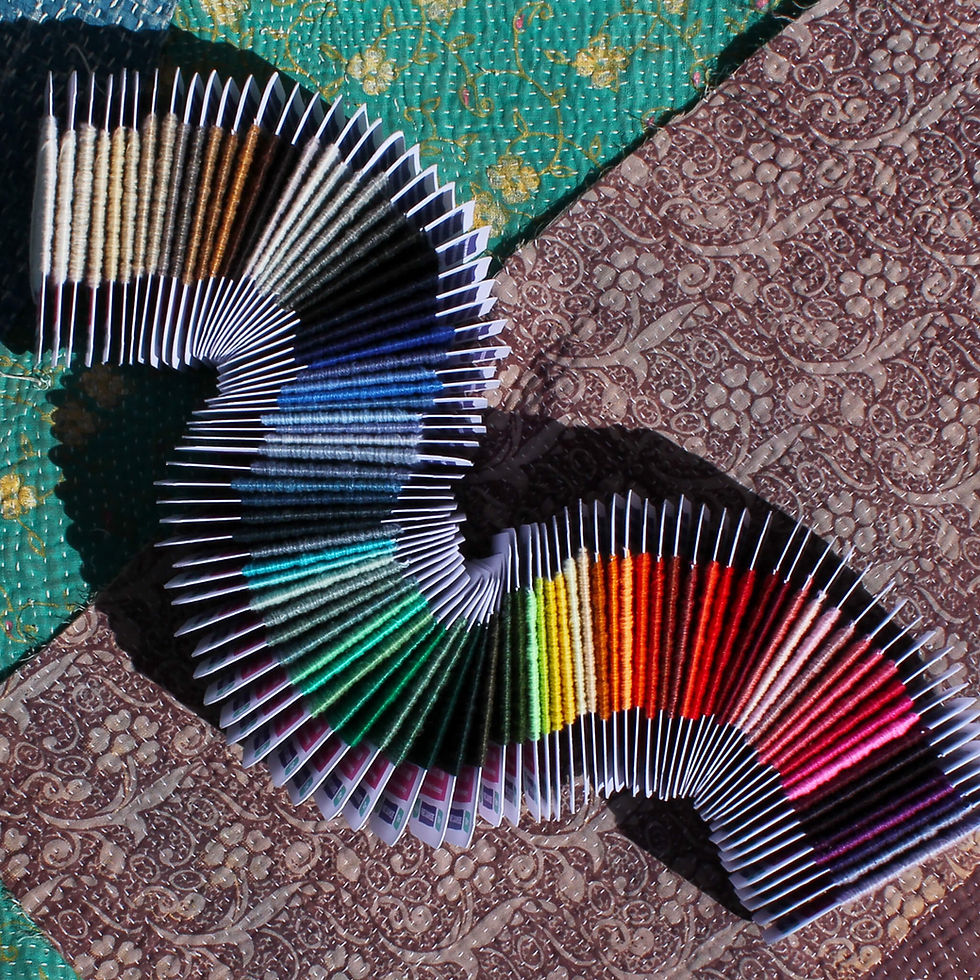
This sustainable thread is perfect for darning, mending or embroidery on lightweight clothing - things like t-shirts, leggings, shirts, skirts and shorts.
Choose from over 40 shades - from brights, neutrals and pastels.
100% GOTS certified organic cotton - the production of this cotton is more ethical and eco-friendly as it sustains the health of soils, ecosystems and people by using natural processes rather than artificial inputs. No toxic chemicals, or GMOs (genetically modified organisms) are used.
2-ply thread with a tight twist which won't split apart as you weave unlike most commercially available embroidery floss. This thread can be doubled or tripled up if you require something a little thicker for your mending project.
It is also non-mercerised (in other words it has a matte finish), which will help you to create a natural looking repair that blends in better with the rest of your garment.
Each card contains approximately 15 m (49 ft) of thread - a little more than our other cotton ranges!
*Every effort has been taken to ensure these photos are an accurate representation of the colours, but since every computer monitor and mobile device is different, we cannot guarantee the colour will be an exact match to what you see online.
If you would like to purchase a sample, then please click here!
Extra-Fine Organic Cotton Mending Thread - Single Colour
Need a little helping hand to choose what you need for a specific mending project? Here's our five top tips:
1. Match like with like - select the same fibre as the garment you're repairing that way the repair and garment should wash and wear in much the same way as the rest of the garment. Take a look at the clothes label inside the garment to find out what it's made from.
2. The same advice applies to thickness too! Pick a yarn or thread that's a similar thickness to the garment or alternatively work with it doubled/tripled to match the weight. Also bear in mind that sometimes you can also split thread and yarns apart to make them thinner.
3. When it's not possible to find the same fibre, choose a fibre from the same group (animal, plant or synthetic) as it will have similar properties and therefore wash and wear in a similar way e.g. cotton would be an excellent alternative for linen as it's an plant fibre like linen.
4. To find a colour match - take the garment into natural light and look at any spots in need of repair. Some areas like the armpit, elbow or collar may be more worn and therefore the colour will be more faded/lighter. Ask yourself what does the colour look like? Is it a solid colour or does it have flecks of different colours aka a melange or marl? What’s the specific colour tone? For example: blue with a hint of green, or a pinkish purple as opposed to a bluish purple. If you can’t find an exact match, always opt for a colour that’s slightly darker than lighter, as the mismatch will be less noticeable. Remember, we do offer a sample service for all our mending threads & darning yarns - click here to find out more!
5. Yarn with added nylon is technically stronger/more durable than pure yarns, but that’s not necessarily a good thing! Your repair may last longer, but it can add stress to the surrounding fabric and result in fresh holes to mend. Not only that, but these fibres are made from oil and shed microplastics in the wash leading to pollution in our rivers and oceans. If you’re worried about how long your repair will last, then some perhaps choose a fibre that’s naturally a tad stronger e.g. mohair or linen. Remember, repairs do not have to be bombproof…they will evolve and wear out over time just like the rest of your garment and that’s okay. New holes = new repair opportunities.